What is amblyopia (lazy eye)?
A type of poor vision that usually happens in one eye, less commonly in both, where the brain can't recognize the sight from that eye. The eye itself is usually healthy. Read more in What is lazy eye?
What causes lazy eye?
Often no specific cause is found. Underlying conditions that can lead to it include refractive errors such as nearsightedness, farsightedness or astigmatism (especially when the eyes differ), misaligned eyes (strabismus) and cataracts.
What are the symptoms?
Poor vision in one eye, poor depth perception, squinting, shutting one eye and tilting the head. Symptoms can be hard to notice, so an eye exam is the way to find out.
How is it diagnosed?
With an eye exam by an eye care professional. The National Eye Institute recommends that all children between 3 and 5 have their vision checked at least once.
How is lazy eye usually treated?
By correcting the underlying problem with glasses, contact lenses or surgery, and by encouraging the brain to use the weaker eye with patching of the stronger eye or atropine eye drops. Starting early is important. Your eye doctor decides what is right for you.
What treatments are there for lazy eye?
The main ones are glasses or contact lenses, patching the stronger eye, atropine drops that blur the stronger eye, and surgery for underlying causes such as cataracts. Dichoptic games are a newer option with mixed evidence. See lazy eye treatment: your options explained.
How long does lazy eye treatment take?
Usually months. The NHS describes a few hours of patching a day for several months, and the American Academy of Ophthalmology says treatment can last several months and sometimes part-time for years. Your eye doctor will re-check vision and adjust the plan.
Can lazy eye come back?
It can. In one review of 653 patching trials in 449 children, 27% were followed by a recurrence within a year of reducing or stopping patching. Ask your eye doctor how to taper treatment and when to review vision. See eye patching for lazy eye.
What is dichoptic therapy?
Therapy that shows a different image to each eye at the same time, so both eyes have to contribute to a task. See how it works.
Does dichoptic therapy work?
The published research is mixed. Small, short studies were encouraging. One headset-based dichoptic therapy beat glasses alone in children aged 4 to 7 and has US FDA authorization for that age group. But in the largest trial of an iPad game (385 children aged 5 to 12), the game was not shown to be as good as patching. In previously treated children aged 7 to 12, it gave no extra benefit over glasses alone. ZyncView is a wellness product and has not been tested in a published trial. See the full research review.
What do I need to play ZyncView?
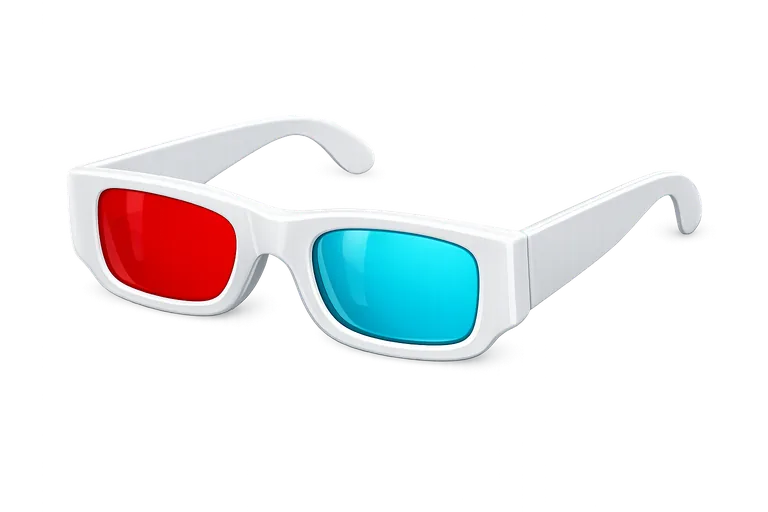
A screen with a browser and red/blue (anaglyph) glasses: red filter on the left eye, blue filter on the right eye. Each game starts with a short setup.
How long should a session be?
ZyncView suggests 10 to 20 minutes of play a day, 5 days a week. New accounts start with a suggested routine of 10 minutes per game per day, and a coach can set different minutes. Take breaks, and stop if you get headaches or double vision.
Can adults use ZyncView?
Yes. The games are for everyone who enjoys them. They are not a treatment. The National Eye Institute notes that lazy eye treatment is usually less effective in adults than in children. An eye exam is worthwhile at any age.
Is ZyncView a treatment or a replacement for my eye doctor?
No. ZyncView is a wellness and entertainment product. It is not a medical device and does not diagnose or treat any condition. If you have a vision concern, see an eye care professional.
Is ZyncView free?
Yes. ZyncView is free to use: there is no cost, no hidden charges and no credit card is required. You can try the games without an account, and creating an account is free too.
Do I need an account?
No. You can try the games as a guest. With an account, your sessions, levels and progress are saved, and a coach of a team you join can suggest a routine for you.
How does the brightness balance work?
When you set up, you tell the game which eye feels stronger and which feels weaker. The game then changes the brightness balance between the two pictures in steps as you play. It is a game setting based on your own impression, not a test or a diagnosis.
What happens to my data?
Read our privacy policy. In short: account details, your eye-comfort answers and session results are stored so that progress can be shown to you and to the coach of a team you join.
Is there research showing ZyncView works?
No. ZyncView makes no health claims and has not published results of its own trial. Research on similar binocular games is summarised, with its limits, on the evidence page.
Source for the general lazy-eye information: National Eye Institute [1].
References
- National Eye Institute. Amblyopia (Lazy Eye). Last updated 26 Nov 2024. Source